
Anker Nebula P1 Review: A Portable Projector That Prioritizes Sound
The Anker Nebula P1 strikes a unique balance as a portable projector that prioritizes audio fidelity with detachable speakers and a native Google TV experience.
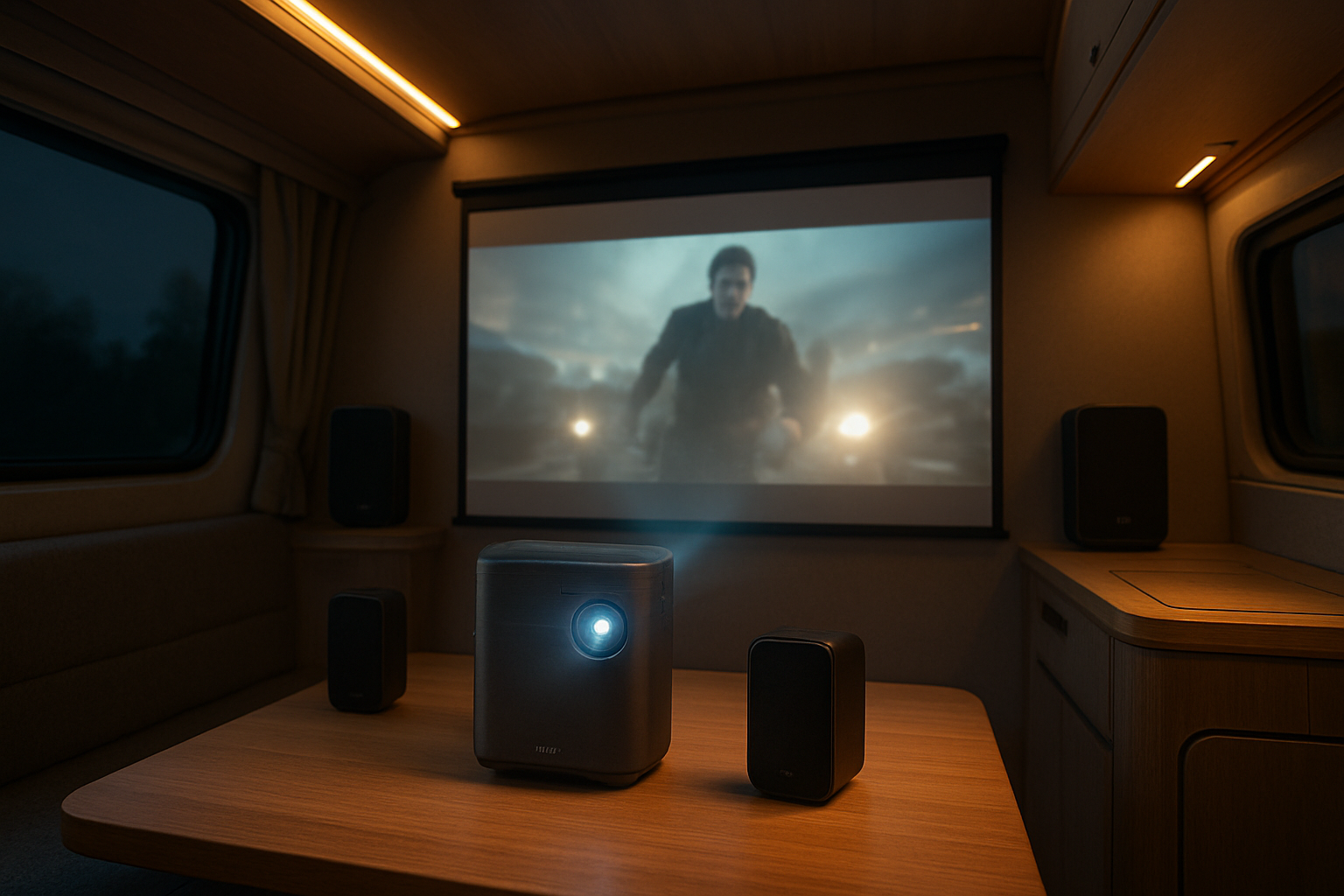
Key Points
- Detachable speakers provide true stereo separation.
- Runs native Google TV with official Netflix support.
- Lacks a built-in battery, requiring an external power source.
- Features 1080p resolution and 650 ANSI Lumens brightness.
- Rugged design with IP54 water and dust resistance for speakers.
In the crowded market of portable projectors, companies often prioritize brightness or extreme miniaturization. However, Anker has taken a distinct path with the Nebula P1. Instead of focusing solely on visual output, Anker has prioritized audio fidelity, integrating a pair of detachable speakers that provide true left- and right-channel separation. This feature alone sets it apart from all-in-one portable projectors like the TCL PlayCube or the Xgimi MoGo, which often suffer from cramped soundstages. Priced at $799 (with frequent sales dropping it to $639), the P1 is aimed at users who prioritize an immersive cinematic audio experience during camping trips or casual movie nights. Technologically, the Nebula P1 is not the brightest in its class. It offers a 1080p image with a light source rated at 650 ANSI Lumens. While this is adequate for dark rooms or controlled environments like a van interior during the day, it struggles against significant ambient light. Furthermore, the device notably lacks a built-in battery. Users are tethered to a power source, whether it’s a wall outlet or a high-capacity power bank capable of delivering 100W via USB-C. This design choice makes it less "portable" than competitors, but it allows for a much lighter 5.3-pound chassis compared to Anker’s massive 72-pound Nebula X1 series. The standout feature—the detachable 10W speakers—delivers a wide, pleasant soundscape. During testing, snapping the speakers onto either side of the projection surface created an immersive experience that traditional portable projectors cannot touch. While the sound is clear and impressive for soda-can-sized drivers, it does lack the deep bass found in Anker’s much larger X1 and X1 Pro models, as the P1 lacks a dedicated subwoofer. However, for vocal-heavy content or music, the performance is exemplary. Users can even turn off the projector lamp and use the unit as a standalone Bluetooth speaker, making it versatile for outdoor gatherings. Software-wise, the Nebula P1 runs Google TV with official Netflix support, offering a familiar and smooth interface. Cold boots take about 50 seconds, while waking from sleep takes only 5 seconds. However, the Intelligent Environment Adaptation (IEA) 4.0 system—designed for auto-focus, keystone correction, and obstacle avoidance—was inconsistent in our testing. We often found ourselves relying on the Nebula Connect app to manually map the projection surface, which felt clunky and cumbersome. Fortunately, the basic autofocus and keystone tools performed well enough to get the job done. When comparing the P1 to alternatives like the $799 TCL PlayCube, the choice comes down to priorities. The PlayCube offers better portability with its built-in battery and slightly higher brightness, but it cannot compete with the Nebula P1’s audio quality. The P1 is a specialized tool; it is for the user who values sound above all else and doesn’t mind carrying an extra power source. With its IP54-rated speakers and quiet 26dB fan noise, it remains a compelling choice for those who want to bring a piece of their home theater into the great outdoors.
Audio Performance and Design
The Nebula P1 distinguishes itself through an uncompromising focus on audio. The detachable speakers are the star of the show, allowing for true stereo imaging that is impossible to achieve with integrated, single-point audio systems found in most portable projectors. This design allows users to place the sound source exactly where it needs to be, significantly improving the immersion of the movie-watching experience. While the speakers excel in clarity and mid-range performance, they are limited by their physical size. They lack the deep, resonant bass found in larger, dedicated home theater units. However, for a portable device, they are exceptionally capable and double as a very respectable Bluetooth speaker for music playback.
Software and Usability
Running on Google TV, the Nebula P1 offers a familiar, user-friendly interface that integrates perfectly with modern streaming habits. The inclusion of official Netflix support is a major advantage, ensuring that users have access to high-quality content without needing external dongles or casting devices. However, the usability is hampered by the inconsistent Intelligent Environment Adaptation (IEA) 4.0. While basic functions like autofocus work reliably, the more advanced features like obstacle avoidance and automated screen fitting require manual intervention via the mobile app. This creates a disconnect between the marketing promise of "automatic" setup and the reality of the user experience.
This article was drafted with AI assistance and editorially reviewed before publication. Sources are listed below.
